Loading...
20%
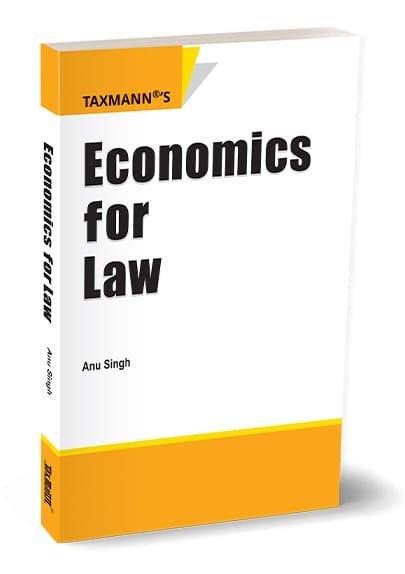
Economics for Law By Dr Anu Singh 1st Edition Nov 25
₹300M.R.P.: ₹375
save ₹75 (20%)
Free delivery on orders above ₹750
1
Free Delivery
On orders above ₹750
2 Days Return
Easy returns & refunds
Cash on Delivery
Pay when you receive
Secure Payment
100% secure transactions
Certified Product
Authentic & verified
Product Details
ISBN-13
9.78937E+12
Publisher
taxmann
Language
English
Weight
350 grams
Edition
1st Edition Nov 2025
About the Book
Economics for Law By Dr Anu Singh 1st Edition Nov 25
Economics for Law By Dr Anu Singh 1st Edition Nov 25
Content
The Present Publication is the Latest Edition, authored by Dr Anu Singh, with the following noteworthy features:
- [Law-first Orientation] Each topic is developed for legal use-cases rather than abstract economics
- [Accessible Pedagogy] Chapters open with Learning Objectives and close with a concise Summary to aid revision
- [Direct Legal Linkages] Dedicated sub-sections connect core results to doctrine, including 'Market in legal context,' 'Legal implications of demand elasticity,' 'Relevance for lawyers and policymakers,' and 'Significance for lawyers'
- [Worked Examples & Diagrams] Graphical representations (e.g., demand–supply, revenue effects, tax incidence) are used where they clarify ideas
- [Comprehensive Back-of-book Aids] A subject index supports quick reference and exam preparation
The coverage of the book is as follows:
- Chapter 1 – Introduction to Economics for Law
- The chapter explains why economics is indispensable to understanding legal systems, contrasts microeconomics and macroeconomics, and outlines the scope of the subject with references to incentive-based and efficiency-based analysis
- Chapter 2 – Basic Economic Concepts Relevant to Law
- The chapter covers scarcity and choice, trade-offs and opportunity cost, incentives, rationality and marginal analysis, exchange-generated surplus, equilibrium and efficiency, the three fundamental economic problems in relation to the legal system, and economic systems
- It includes learning objectives that emphasise policy effectiveness (Pareto and Kaldor-Hicks), the PPF, and the circular flow
- Chapter 3 – Market Mechanism
- The chapter develops demand and supply, determinants, market equilibrium and shocks, and consumer/producer surplus, with a focused section on markets in a legal context
- Chapter 4 – Elasticity of Demand and Supply
- The chapter explains types and interpretation of elasticity and applies them to revenue, tax incidence, and evidentiary issues in cartel and merger matters, with supporting diagrams
- Chapter 5 – Consumer Choice Theory
- The chapter covers utility (cardinal and ordinal), indifference analysis, behavioural economics, and the rationale for law students to understand consumer behaviour
- Chapter 6 – Theory of Production and Cost
- The chapter distinguishes short-run and long-run perspectives, surveys cost concepts, and highlights relevance for lawyers and policymakers
- Chapter 7 – Theory of the Firm | Highly Competitive Markets
- The chapter introduces firms, analyses behaviour across competitive structures, and states the significance for lawyers
- Chapter 8 – Theory of the Firm | Highly Concentrated Markets
- The chapter analyses oligopoly and monopoly, market power, and strategic conduct in concentrated industries
About the author
Dr Anu Singh is an Associate Professor of Economics at the School of Law, Christ (Deemed to be University). With over two decades of academic and industry experience, she has established herself as a dedicated educator, researcher, and thought leader in the field of economics.
She holds a PhD in Economics from the Giri Institute of Development Studies, which equips her with a strong foundation in both the theoretical and applied aspects of economics. Over the course of her career, Dr Singh has taught a wide range of subjects, including Principles of Economics, Institutional Economics, Law and Economics, and International Economics. She has also guided several doctoral candidates, reflecting her dedication to mentoring and nurturing the next generation of scholars.
No reviews yet. Be the first to review!
Related Books

Taxmann Indian Accounting Standards & Corporate Accounting Practices By T P Ghosh 10th Edition Nov 2025
by T P GHOSH
₹7495₹9995

Taxmann GST Appeals & Appellate Tribunal By CMA Dipak N Joshi 1st Edition Dec 2025
by CMA DIPAK N JOSHI
₹1380₹1725

Commercial Income Tax Act 2025 by CA Girish Ahuja 1st Edition 2025 Commercial Income Tax Act 2025 by CA Girish Ahuja 1st Edition 2025
by Girish Ahuja & Ravi Gupta
₹1799₹2495

Book Corporation Compendium on GST By Vivek Jalan , S.K. Panda 1st Edition Dec 2025
by Vivek Jalan
₹5845₹7795
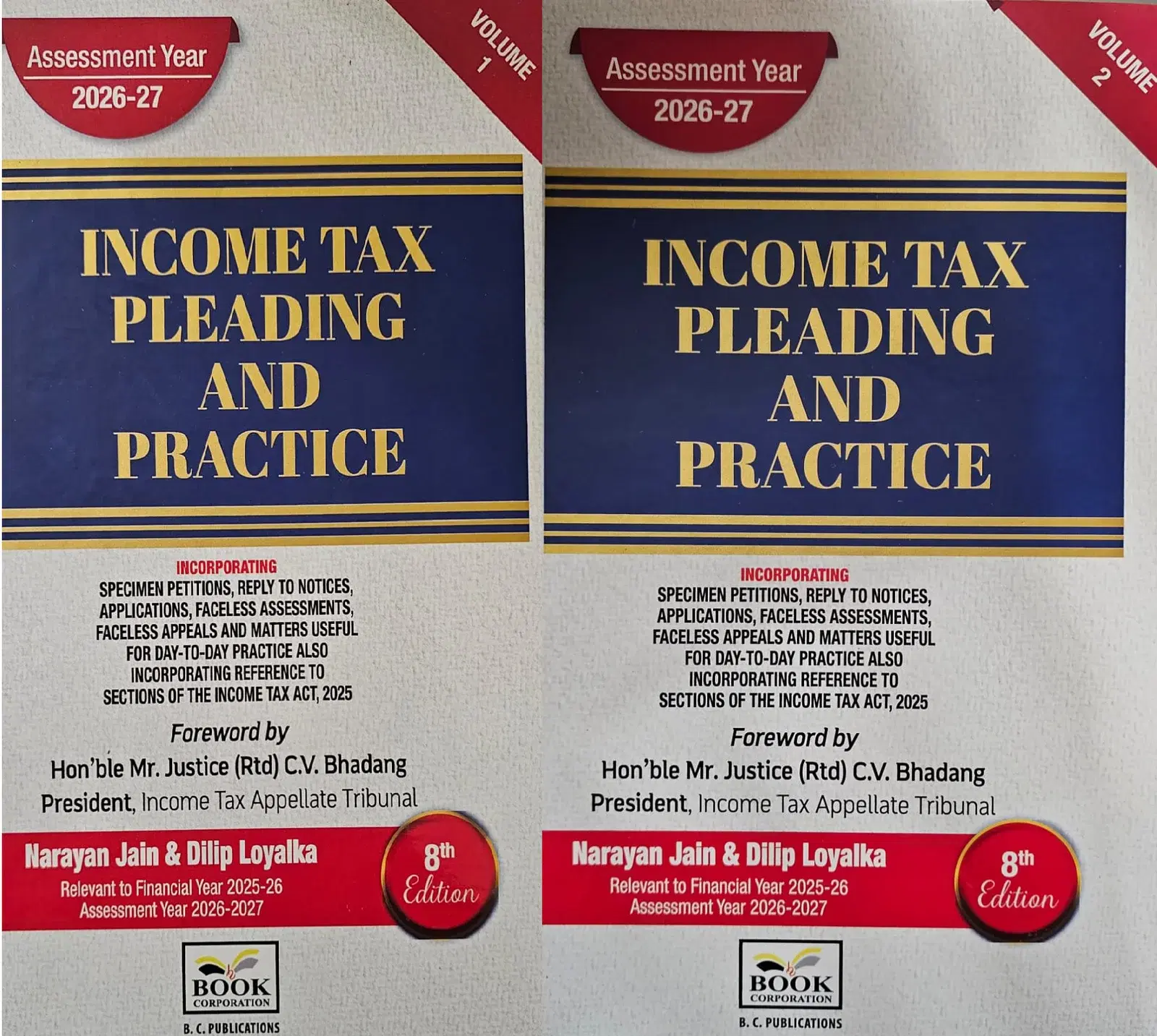
Book Corporation’s Income Tax Pleadings and Practice by Narayan Jain & Dilip Loyalka 8th Edition Dec 2025
by Narayan Jain
₹5245₹6995

Management Accounting By Dr Madhu Vij, Dr Deepika Dhingra 2nd Edition June 25
by Dr Deepika Dhingra
₹635₹795

Alternate Dispute Resolution Including Mediation Act 2023 by Gulzari Lal Sharma Raman Kumar Sharma 2nd Edition 24
by GULZARI LAL SHARMA RAMAN KUMAR SHARMA
₹395₹495
![LIMITED LIABILITY PARTNERSHIP with FAQs [University Edition] By J.P. Sharma 1st Edition 2019](/_next/image?url=https%3A%2F%2Fwww.makemydelivery.com%2Fwp-content%2Fuploads%2F2025%2F11%2FLIMITED-LIABILITY-PARTNERSHIP-with-FAQs-University-Edition-By-J.P.-Sharma-1st-Edition-2019.jpg&w=3840&q=75)
LIMITED LIABILITY PARTNERSHIP with FAQs [University Edition] By J.P. Sharma 1st Edition 2019
by J.P. Sharma
₹360₹450