Loading...
20%
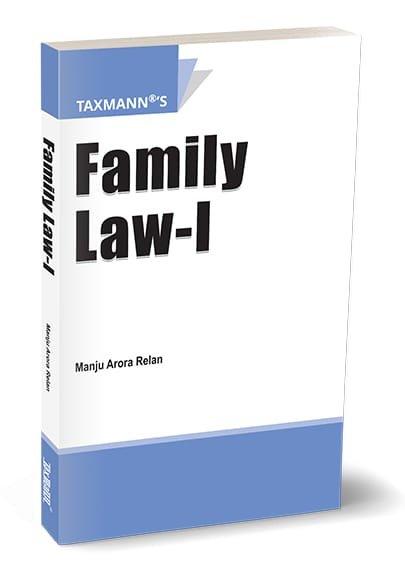
Family Law I By Manju Arora Relan Nov 25 Edition
₹795M.R.P.: ₹995
save ₹200 (20%)
Free delivery on orders above ₹750
1
Free Delivery
On orders above ₹750
2 Days Return
Easy returns & refunds
Cash on Delivery
Pay when you receive
Secure Payment
100% secure transactions
Certified Product
Authentic & verified
Product Details
ISBN-13
9.78937E+12
Publisher
taxmann
Language
English
Weight
850 grams
Edition
1st Edition Nov 2025
About the Book
Family Law I By Manju Arora Relan Nov 25 Edition
Family Law I By Manju Arora Relan Nov 25 Edition
Content
The Present Publication is the Latest Edition, authored by Prof. Manju Arora Relan, with the following noteworthy features:
- [Two‑part Architecture] Part A (Hindu Law) and Part B (Muslim Law), each opening with identity, sources, and schools before moving to institutions (marriage, divorce, maintenance, guardianship, adoption) and procedure
- [Doctrine and Discourse] Doctrinal exposition paired with debates on autonomy, equality, dignity and constitutional scrutiny of personal laws
- [Up‑to‑date Statutory Canvas] Discussion spans the Hindu Marriage Act 1955, the Prohibition of Child Marriage Act 2006, the Hindu Adoptions and Maintenance Act 1956, the Guardians and Wards Act 1890, the Family Courts Act, the Muslim Women (Protection of Rights on Marriage) Act 2019, and maintenance under Section 125 CrPC (now Section 144 BNSS), among others
- [Landmark Case Laws] Supreme Court and High Court decisions are woven into the analysis; an extensive List of Cases supports quick referencing
- [Comparative Insights] Mitakshara vs Dayabhaga; Sunni and Shia sub‑schools; intersections of custom, personal law, and constitutional mandates
- [Contemporary Issues] Marriage with transgender persons, registration of marriages, legitimacy and coparcenary rights, UCC debates, and constitutional challenges to practices like RCR and Nikah Halala
- [Learning Aids] Every chapter ends with a Summary; content is organised with headings/sub‑headings for fast navigation
The coverage of the book is as follows:
- Part A — Hindu Law (Chs. 1–15)
- Identity & Foundations – Who is a Hindu? (statutory reach, converts, customary communities); Schools (Mitakshara & Dayabhaga; women's rights; migration & conversion); Sources (Śruti, Smṛti, commentaries, custom, precedent, legislation)
- Marriage & its Evolution – Anthropological and Indian historical development; eight classical forms; colonial codification; Hindu Marriage Act 1955 (Section 4's overriding effect); ceremonies and registration; void/voidable marriages; child marriage (PCMA 2006; status and case law); marriage with transgender persons
- Matrimonial Remedies – Restitution of Conjugal Rights—meaning, ingredients, constitutional validity; Judicial Separation
- Nullity & Theories of Divorce – Impotence, consent vitiation (force/fraud), pre‑marital pregnancy; fault, consent, and breakdown theories; 1976 reforms; additional statutory grounds
- Dissolution of Marriage – Adultery, cruelty, desertion, conversion, mental disorder, communicable disease, renunciation, presumption of death; Section 13(1‑A) breakdown; wife's special grounds; mutual consent (procedure, withdrawal, cooling‑off); customary divorce; irretrievable breakdown (Supreme Court's exercise of powers; Law Commission perspectives); remarriage; legitimacy of children of void/voidable marriages and coparcenary/service‑benefit rights
- Jurisdiction & Procedure – Local jurisdiction, CPC application, transfer, evidence & in‑camera proceedings, bars to relief, reconciliation duty, counter‑claims, appeals
- Ancillary Proceedings & Maintenance – Section 24 maintenance pendente lite; permanent alimony, custody (Section 26), stridhan and disposal of property; multiplicity of maintenance remedies, effective date (application/order/summons), enforcement and striking off defence
- Adoption – Capacity (male/female), who may give/receive, custom, incidents and effects; JJ Act adoption (eligibility, domestic & inter‑country procedures); presumptions and factum valet
- Guardianship & Family Courts – Natural, testamentary, court‑appointed and de facto guardians; welfare principle; reforms; Family Courts—establishment, jurisdiction, procedure, appeals
- Part B — Mulsim Law (Chs. 16–23)
- Identity, Schools & Sources – Who is a Muslim?; key milestones and cases; Sunni/Shia sub‑schools (Hanafi, Maliki, Shafi'i, Hanbali; Shia branches); primary and secondary sources of Islamic law
- Marriage (Nikah) – Proposal & acceptance, competency, prohibited degrees, iddat, void vs irregular marriages, registration, muta marriage (incidents and cases), constitutionality, polygamy debates and Law Commission notes, PCMA interface, inter‑religious marriages, RCR and its enforcement
- Divorce – Husband‑initiated talaq (capacity, oral/written), talaq‑ul‑sunnat vs talaq‑ul‑biddat and the 2019 Act; contingent and delegated talaq (talaq‑i‑tafweez); khula and mubarat, and their effects; Dissolution of Muslim Marriage Act grounds; conversion/apostasy; irretrievable breakdown debates; halala
- Acknowledgement of Paternity – Presumptions of legitimacy, inheritance implications, modern challenges; adoption under Muslim personal law vs JJ Act 2015
- Guardianship – Natural/legal, testamentary, court‑appointed and de facto guardians; guardianship of person, in marriage, and of property; mother's rights; powers/duties; interaction with Guardians and Wards Act 1890
- Maintenance (Nafaqah) – Sources and principles; children's maintenance post‑divorce; post‑divorce maintenance (iddat, CrPC/BNSS interface); Muslim Women (Protection of Rights on Divorce) Act 1986; protection under PWDVA 2005; effect of conversion
About the author
No reviews yet. Be the first to review!
Related Books

Taxmann Indian Accounting Standards & Corporate Accounting Practices By T P Ghosh 10th Edition Nov 2025
by T P GHOSH
₹7495₹9995

Taxmann GST Appeals & Appellate Tribunal By CMA Dipak N Joshi 1st Edition Dec 2025
by CMA DIPAK N JOSHI
₹1380₹1725

Commercial Income Tax Act 2025 by CA Girish Ahuja 1st Edition 2025 Commercial Income Tax Act 2025 by CA Girish Ahuja 1st Edition 2025
by Girish Ahuja & Ravi Gupta
₹1799₹2495

Book Corporation Compendium on GST By Vivek Jalan , S.K. Panda 1st Edition Dec 2025
by Vivek Jalan
₹5845₹7795
Book Corporation’s Income Tax Pleadings and Practice by Narayan Jain & Dilip Loyalka 8th Edition Dec 2025
by Narayan Jain
₹5245₹6995

Management Accounting By Dr Madhu Vij, Dr Deepika Dhingra 2nd Edition June 25
by Dr Deepika Dhingra
₹635₹795

Alternate Dispute Resolution Including Mediation Act 2023 by Gulzari Lal Sharma Raman Kumar Sharma 2nd Edition 24
by GULZARI LAL SHARMA RAMAN KUMAR SHARMA
₹395₹495
![LIMITED LIABILITY PARTNERSHIP with FAQs [University Edition] By J.P. Sharma 1st Edition 2019](/_next/image?url=https%3A%2F%2Fwww.makemydelivery.com%2Fwp-content%2Fuploads%2F2025%2F11%2FLIMITED-LIABILITY-PARTNERSHIP-with-FAQs-University-Edition-By-J.P.-Sharma-1st-Edition-2019.jpg&w=3840&q=75)
LIMITED LIABILITY PARTNERSHIP with FAQs [University Edition] By J.P. Sharma 1st Edition 2019
by J.P. Sharma
₹360₹450