Loading...
20%
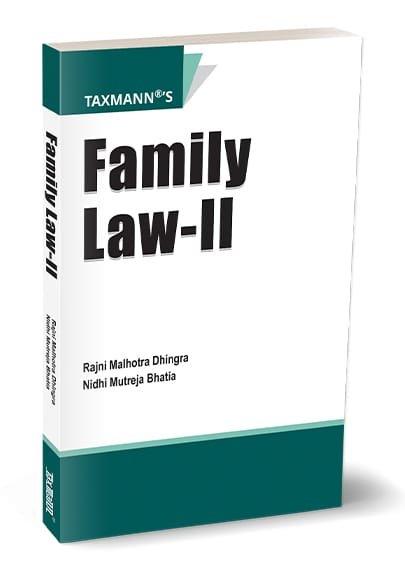
Family Law II By Rajni Malhotra Dhingra, Nidhi Mutreja Bhatia Nov 25 Edition
₹635M.R.P.: ₹795
save ₹160 (20%)
Free delivery on orders above ₹750
1
Free Delivery
On orders above ₹750
2 Days Return
Easy returns & refunds
Cash on Delivery
Pay when you receive
Secure Payment
100% secure transactions
Certified Product
Authentic & verified
Product Details
ISBN-13
9.78936E+12
Publisher
taxmann
Language
English
Weight
670 grams
Edition
1st Edition Nov 2025
About the Book
Family Law II By Rajni Malhotra Dhingra, Nidhi Mutreja Bhatia Nov 25 Edition
Family Law II By Rajni Malhotra Dhingra, Nidhi Mutreja Bhatia Nov 25 Edition
Content
The Present Publication is the Latest Edition, authored by Prof. (Dr) Rajni Malhotra Dhingra & Dr Nidhi Mutreja Bhatia, with the following noteworthy features:
- [Doctrinal Depth & Practical Relevance] Integrates classical Hindu and Muslim jurisprudence with modern statutory law and recent judgments
- [Comprehensive Coverage] Detailed treatment of coparcenary, partition, succession, and female inheritance rights
- [Pedagogical Aids] Supported with diagrams, flowcharts, comparative tables, and illustrative examples
- [Gender Inclusivity] Discusses women as coparceners and Kartas, referencing post-2005 legal developments
- [Statutory and Case-based Integration] Aligns with the Hindu Succession Act 1956 & 2005 Amendment, and Muslim personal law precedents
- [Exam-oriented Structuring] Each chapter concludes with summaries, enabling efficient revision for university and judicial exams
- [Scholarly Tone with Accessibility] Written in simple language without compromising technical rigour
The book spans twelve chapters, organised logically from fundamental doctrines to modern reforms:
- Part I – Foundations of Hindu Law
- Schools of Hindu Law
- Explains Mitakshara and Dayabhaga schools, their sub-schools, and doctrinal differences, including key commentaries such as Mitakshara, Dayabhaga, Viramitrodaya, and Smriti Chandrika
- Includes 'Doctrine of Factum Volet,' its application and judicial recognition
- Explains Mitakshara and Dayabhaga schools, their sub-schools, and doctrinal differences, including key commentaries such as Mitakshara, Dayabhaga, Viramitrodaya, and Smriti Chandrika
- Joint Hindu Family
- Discusses formation, composition, presumption, and property classification — distinguishing between joint family property, joint property, and coparcenary
- Karta of Joint Family
- Defines the role, powers, and liabilities of the Karta, exploring the landmark shift recognising female Kartas post-2005 amendment
- Coparcenary System
- Explains the concept of coparceners by birth, their rights, and the doctrine of survivorship. Includes analysis of coparcenary under Dayabhaga and Mitakshara traditions
- Schools of Hindu Law
- Part II – Partition and Succession
- Partition – Concept and Incidents
- Defines partition and its types, rules governing partition by metes and bounds, family arrangements, and the distinction between severance and division of property
- Reopening of the Partition and Reunion
- Analyses legal grounds for reopening partitions — including fraud, mistake, and after-born sons and explains conditions for reunion and its proof
- Hindu Succession (Amendment) Act 2005
- Evaluates legislative changes—introduction of daughters as coparceners, abolition of survivorship, and deletion of discriminatory provisions (Sections 23, 24)
- Hindu Succession Act 1956 – A Detailed Analysis
- Breaks down definitions (agnates, cognates, intestate), succession modes (class I and II heirs), testamentary succession, and doctrines of pious obligation and notional partition
- Partition – Concept and Incidents
- Part III – Muslim Law | Inheritance, Gifts, and Endowments
- Wakf (Religious Endowments)
- Explains creation, object, types, and management of Wakf, and the role of Mutawalli
- Wasiyat (Will)
- Covers essentials, validity, capacity, revocation, and restrictions under Muslim law, with illustrative judicial references
- Hiba (Gift)
- Discusses essentials of valid Hiba, types, revocation rules, and judicial interpretations, distinguishing Hiba from other property transfers
- Comparative Study
- Presents a synoptic comparison between Hindu and Muslim laws on succession, gift, and will, underscoring harmony and divergence
- Wakf (Religious Endowments)
- Part IV – Parsi & Christian Succession
- Key rules under the Indian Succession Act, division among spouse/next-of-kin, shared principles and differences, testamentary provisions and guardianship
- Each chapter is supported with summaries, key cases, and statutory references
About the authors
Nidhi Mutreja Bhatia -
Dr Nidhi Mutreja Bhatia is a practicing advocate and academician with a strong foundation in criminal and family law. She holds an LL.B. from Campus Law Centre, University of Delhi, an LL.M. from Kurukshetra University, and a Doctorate from Mewar University, where she specialised in judicial discretion and sentencing.
No reviews yet. Be the first to review!
Related Books

Taxmann Indian Accounting Standards & Corporate Accounting Practices By T P Ghosh 10th Edition Nov 2025
by T P GHOSH
₹7495₹9995

Taxmann GST Appeals & Appellate Tribunal By CMA Dipak N Joshi 1st Edition Dec 2025
by CMA DIPAK N JOSHI
₹1380₹1725

Commercial Income Tax Act 2025 by CA Girish Ahuja 1st Edition 2025 Commercial Income Tax Act 2025 by CA Girish Ahuja 1st Edition 2025
by Girish Ahuja & Ravi Gupta
₹1799₹2495

Book Corporation Compendium on GST By Vivek Jalan , S.K. Panda 1st Edition Dec 2025
by Vivek Jalan
₹5845₹7795
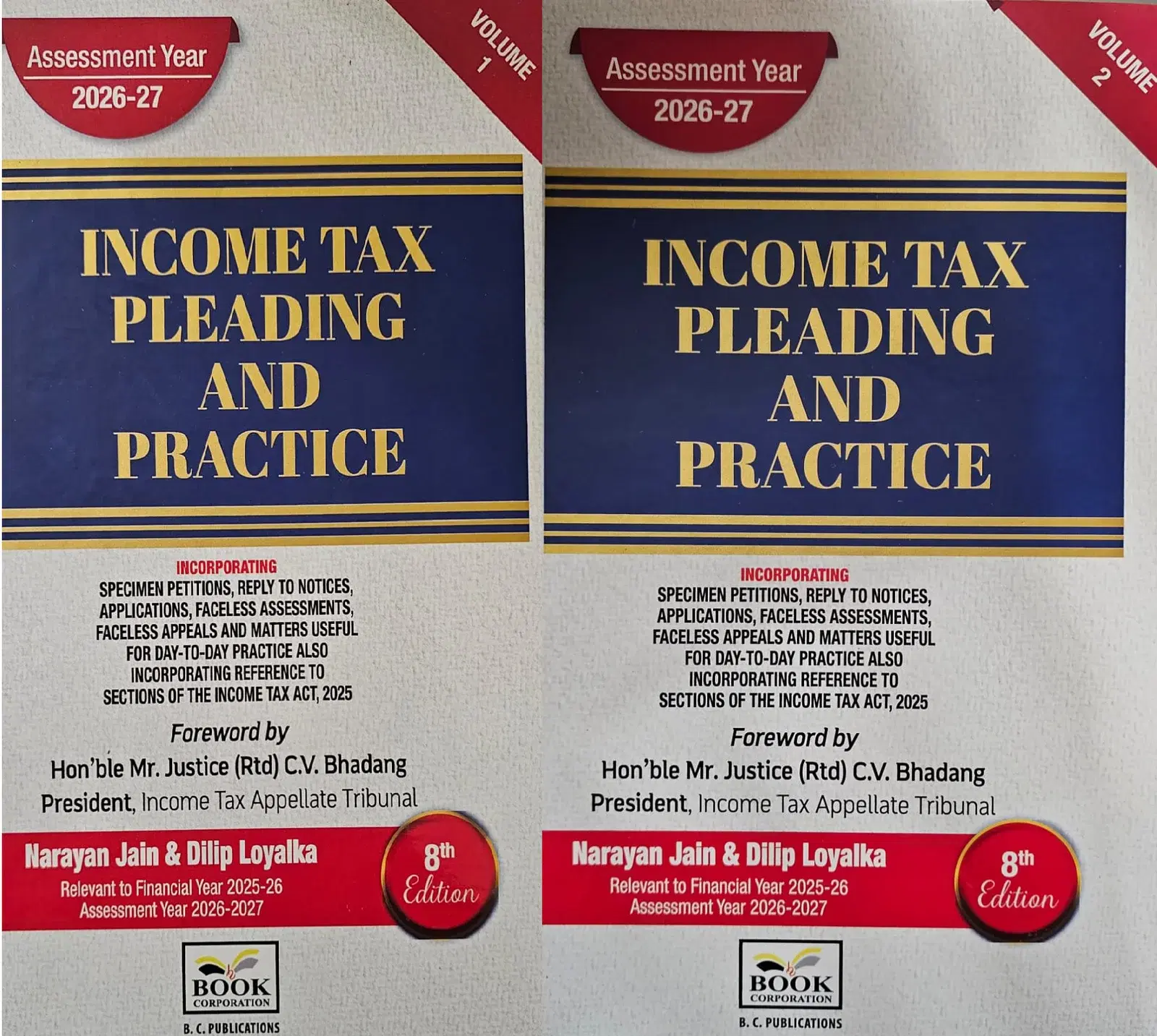
Book Corporation’s Income Tax Pleadings and Practice by Narayan Jain & Dilip Loyalka 8th Edition Dec 2025
by Narayan Jain
₹5245₹6995

Management Accounting By Dr Madhu Vij, Dr Deepika Dhingra 2nd Edition June 25
by Dr Deepika Dhingra
₹635₹795

Alternate Dispute Resolution Including Mediation Act 2023 by Gulzari Lal Sharma Raman Kumar Sharma 2nd Edition 24
by GULZARI LAL SHARMA RAMAN KUMAR SHARMA
₹395₹495
![LIMITED LIABILITY PARTNERSHIP with FAQs [University Edition] By J.P. Sharma 1st Edition 2019](/_next/image?url=https%3A%2F%2Fwww.makemydelivery.com%2Fwp-content%2Fuploads%2F2025%2F11%2FLIMITED-LIABILITY-PARTNERSHIP-with-FAQs-University-Edition-By-J.P.-Sharma-1st-Edition-2019.jpg&w=3840&q=75)
LIMITED LIABILITY PARTNERSHIP with FAQs [University Edition] By J.P. Sharma 1st Edition 2019
by J.P. Sharma
₹360₹450